Fitlab Nutrition: A Balanced Approach to Everyday Wellbeing
Clear, responsible guidance for nutrition, supplements and everyday wellbeing, built around realistic routines and informed choices.
A Practical View of Everyday Wellbeing
Fitlab Nutrition is built around a straightforward idea: good health is rarely shaped by one decision, one product or one perfect routine. It usually develops through a combination of habits that can be maintained consistently, including balanced meals, regular movement, sufficient rest, hydration, stress management and thoughtful nutritional support.
Modern life does not always make these habits easy. Work demands, irregular schedules, limited sleep and changing responsibilities can affect the way people eat, move and recover. Even those with good intentions may find that their routine changes from one week to the next.
Fitlab Nutrition offers clear and responsible information for people who want to take a practical approach to nutrition and everyday wellbeing. The focus is not on shortcuts, unrealistic promises or extreme methods. It is about understanding how nutritional supplements may complement a sensible lifestyle when they are selected carefully and used appropriately.
The aim is to make wellbeing feel more manageable. Rather than expecting perfection, Fitlab Nutrition encourages informed choices, realistic expectations and small actions that can be repeated over time. This practical view helps people look at their routine honestly, notice where support may be useful and avoid treating supplements as replacements for food, movement, sleep or professional advice. Over time, steady habits often matter more than dramatic changes, and Fitlab Nutrition keeps the focus on choices that can fit into everyday life.
A Balanced Foundation for Everyday Wellbeing
A healthy lifestyle is made up of many connected parts. Food provides energy and essential nutrients. Movement supports physical function and general wellbeing. Sleep allows the body and mind to recover. Hydration contributes to normal physical processes, while stress management can influence how consistently healthy habits are maintained.
Supplements may have a place within this wider picture, but they should not be treated as substitutes for the foundations that matter most.
A capsule, powder or nutritional formula cannot compensate fully for consistently poor sleep, an unbalanced diet or a lack of movement. It may, however, provide additional support where there is a clear reason for using it and where it is appropriate for the individual.
Fitlab Nutrition approaches supplement use with this balance in mind. The purpose is not to encourage people to take as many products as possible. It is to help them think carefully about what they use, why they use it and how it fits into the rest of their routine.
This measured approach also recognises that individual needs vary. A supplement that appears suitable for one person may not be appropriate for another. Diet, age, medication, health conditions, pregnancy, breastfeeding and personal nutritional needs may all affect suitability.
Responsible decisions begin with good information.
Support That Fits Real Life
Many people understand the basic principles of healthy living but find them difficult to follow consistently.
Meals may be delayed because of work. Exercise may be reduced during busy periods. Sleep may become irregular. Stress can affect appetite, motivation and energy. Travel, family responsibilities and changing routines can also make long-term consistency difficult.
These challenges are common, and they do not mean that someone has failed.
A practical approach starts by recognising what is realistic. For some people, that may mean preparing more balanced meals during the week. For others, it may mean improving hydration, walking more regularly or creating a steadier sleep routine.
The most useful changes are often the ones that fit naturally into daily life.
Fitlab Nutrition supports an approach based on progress rather than perfection. A routine does not need to be complicated to be meaningful. Small actions, repeated consistently, can provide a stronger foundation than an intense plan that is impossible to maintain.
Where supplements are used, they should support this foundation rather than distract from it.
Everyday Areas Where Nutrition May Support Wellbeing
Wellbeing is not limited to one part of the body or one daily habit. Digestion, energy, activity, sleep, food choices and stress can all influence how a person feels.
Fitlab Nutrition focuses on several areas that are commonly connected with everyday health.
Gut Health and Digestive Balance
The digestive system plays an important role in breaking down food, absorbing nutrients and supporting normal bodily functions.
Digestive wellbeing can be influenced by several factors, including diet, fibre intake, hydration, meal timing, stress and physical activity. The variety of foods a person eats may also affect the diversity of microorganisms living within the gut.
A balanced diet containing vegetables, fruit, whole grains, pulses and other fibre-containing foods can help support normal digestive function. Drinking enough fluid and remaining physically active may also contribute to regularity and digestive comfort.
The gut microbiome has become an increasingly discussed area of nutrition. It refers to the community of microorganisms that naturally live in the digestive tract. These microorganisms interact with the food a person eats and form part of a complex biological environment.
However, gut health should not be reduced to one ingredient or one product. Digestive experiences differ greatly between individuals, and persistent discomfort should not be self-diagnosed or managed only through supplements.
Nutritional products may form part of a broader digestive routine where suitable, but they should be used alongside sensible eating habits and appropriate professional guidance.
Metabolic Wellbeing
Metabolism describes the processes through which the body converts and uses energy.
It is influenced by many factors, including food intake, physical activity, muscle mass, sleep, age, stress and general health. Because metabolism is complex, it is rarely helpful to describe it as something that can simply be "boosted" through one ingredient or quick solution.
A balanced approach to metabolic wellbeing usually involves regular meals, appropriate portion awareness, daily movement, strength-building activity where suitable and adequate recovery.
Sleep also matters. A disrupted sleep routine can affect energy, appetite and the ability to maintain healthy habits. Stress may have a similar effect, particularly when it influences eating patterns or reduces motivation to move.
Fitlab Nutrition presents metabolic wellbeing as part of a wider lifestyle rather than as a narrow focus on body weight.
Nutritional supplements may support specific needs, but they should not be presented as replacements for balanced food choices, physical activity or medical care.
Daily Energy and Focus
Energy levels naturally change throughout the day. They may be influenced by sleep, hydration, meal timing, stress, physical activity and general health.
A person who regularly skips meals, drinks too little water or sleeps inconsistently may find it harder to maintain steady concentration and energy. Long periods of sitting and high levels of stress can also contribute to feelings of tiredness.
A practical energy routine begins with the basics.
Regular meals can help provide a steadier supply of nutrients. Hydration supports normal physical function. Movement can help break up long periods of inactivity, while a consistent sleep routine may improve recovery and daytime alertness.
Some people also consider nutritional supplements as part of their routine. This decision should be based on a clear purpose rather than the assumption that tiredness can always be solved by taking a product.
Persistent or unexplained fatigue can have many causes and should be discussed with an appropriate healthcare professional.
Fitlab Nutrition encourages people to look at their full routine before relying on any single form of support.
Weight-Management Support
Weight management is often discussed in unrealistic terms. Extreme restrictions, rapid transformations and short-lived plans can create pressure without helping people build sustainable habits.
A more measured approach considers the pattern of daily life.
Balanced meals, appropriate portions, regular movement, sufficient sleep and stress awareness may all contribute to more consistent weight-management habits. Progress may also depend on personal health, age, activity levels and individual circumstances.
There is no single routine that suits everyone.
For some people, improving meal structure may be helpful. Others may benefit from increasing everyday movement, reducing highly restrictive eating patterns or becoming more aware of the difference between physical hunger and stress-related eating.
Supplements should not be presented as a way to avoid these foundations. They may complement a sensible plan where appropriate, but they cannot guarantee weight loss or replace long-term behavioural consistency.
Fitlab Nutrition supports realistic expectations. Sustainable progress is often gradual, and it may not follow a perfectly straight line.
How Thoughtful Supplement Use Works
Responsible supplement use begins with a simple question: why is the product being considered?
Some people use supplements because their diet may not consistently provide a particular nutrient. Others may have received professional advice or may be looking for support that fits a specific lifestyle need.
Whatever the reason, the decision should be considered carefully.
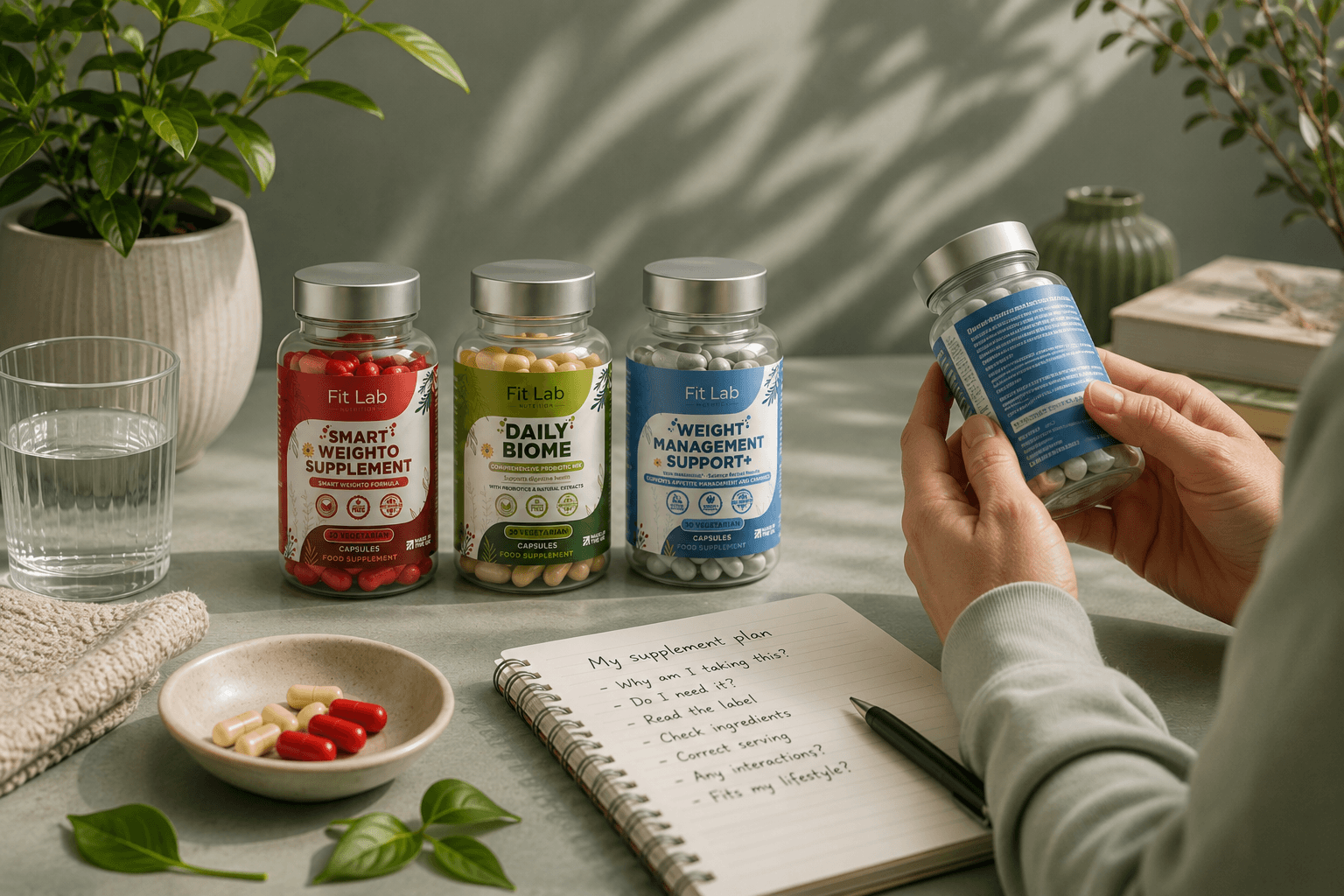
Before using a supplement, it is important to read the label, review the ingredients and understand the suggested serving. Taking more than the stated amount does not necessarily improve the outcome and may increase the risk of unwanted effects.
It is also important to consider whether several products contain the same ingredients. Combining supplements without checking their contents can result in unnecessary duplication.
People who take medication should be particularly cautious. Some ingredients may interact with medicines or may not be suitable for certain health conditions.
Pregnancy, breastfeeding, allergies, intolerances and dietary preferences may also affect product suitability.
A responsible routine is not measured by how many supplements a person takes. It is measured by whether each product has a clear purpose, is used correctly and fits safely within the person's wider lifestyle.
Ingredient Clarity and Quality Awareness
Clear information matters when people are making decisions about nutrition.
A well-presented supplement should make it easier to understand what the product contains, how it is intended to be used and who may need to avoid it.
Ingredient lists should be read carefully rather than treated as a formality. They can provide useful information about active ingredients, capsule materials, flavourings, sweeteners and potential allergens.
Serving information is equally important. The stated serving is there to guide appropriate use. It should not be increased simply because a person expects faster results.
Suitability details may also help people understand whether a product aligns with particular dietary preferences. However, assumptions should never be made based only on packaging style or marketing language. A product should only be considered vegetarian, vegan, gluten-free or allergen-free where that information is clearly confirmed.
Fitlab Nutrition supports transparency over hype.
People should be able to understand the purpose of a product without being overwhelmed by exaggerated claims, vague scientific language or unnecessary complexity.
A Measured View of Evidence
Nutrition research can help explain how ingredients function and where they may have a useful role. However, scientific evidence should be communicated carefully.
A study may examine a specific ingredient, serving level, group of participants or period of time. That does not automatically mean that every person will experience the same outcome.
Individual responses may vary because of differences in diet, health, age, medication, activity levels and lifestyle.
Scientific terms can sometimes make marketing claims sound more convincing than they are. Expressions such as "clinically tested" or "science-backed" should not be accepted without context.
It is useful to ask what was tested, how it was studied and whether the evidence relates directly to the product being discussed.
Fitlab Nutrition takes a measured view of evidence. Research can inform decisions, but it should not be used to create certainty where certainty does not exist.
No ingredient can replace a varied diet, healthy habits or appropriate healthcare.
Dietary Preferences and Suitability
Dietary preferences are an important part of supplement selection.
Some people avoid animal-derived ingredients. Others need to check for gluten, dairy, soya or other potential allergens. Capsule shells, flavourings, colourings and processing ingredients may all affect suitability.
A product should not be assumed to be suitable for a vegan or vegetarian diet unless that information is clearly stated.
The same principle applies to allergy-related claims. "Natural" does not mean that a product is automatically free from allergens or suitable for everyone.
People with known allergies or intolerances should review labels carefully and seek additional information where necessary.
Ingredient transparency allows people to make choices that are better aligned with their needs, beliefs and health circumstances.
Building Steadier Daily Habits
Wellbeing often improves when healthy actions become part of a repeatable routine.
This does not require a perfect schedule. It requires a structure that can be maintained on ordinary days, including days when motivation is low or time is limited.
Eat Regular, Balanced Meals
Balanced meals may include a source of protein, vegetables or fruit, carbohydrates and appropriate fats.
The exact balance will differ between people, but regular meals can make it easier to maintain energy and reduce the tendency to rely on convenient options when hunger becomes intense.
Meal preparation does not need to be complicated. Even simple planning can help create more consistency.
Stay Hydrated
Hydration supports normal physical and mental function.
Fluid needs vary depending on activity, temperature, health and diet, but drinking regularly throughout the day is generally more useful than waiting until thirst becomes intense.
Move Consistently
Movement does not have to mean a demanding exercise programme.
Walking, stretching, cycling, household activity and structured workouts can all contribute to a more active routine.
The most suitable form of movement is one that can be performed safely and maintained consistently.
Protect Sleep
Sleep is often treated as optional when routines become busy, yet it affects concentration, recovery, appetite and mood.
A more regular bedtime, reduced late-night screen use and a calmer evening routine may support better sleep habits.
Persistent sleep difficulties should be discussed with a healthcare professional.
Manage Stress Realistically
Stress cannot always be removed, but it can sometimes be managed more effectively.
Short breaks, movement, breathing exercises, time outdoors and clearer boundaries may help some people feel more in control of their routine.
Avoid Extreme Restrictions
Strict plans may produce short-term compliance but can be difficult to maintain.
A balanced routine allows flexibility while still supporting long-term goals. Occasional changes do not erase progress.
Review Progress Calmly
Progress should be assessed over time rather than judged from one difficult day.
It may appear as improved consistency, better meal planning, more regular movement or a stronger awareness of personal habits.
Why Individual Needs Matter
No two people have exactly the same nutritional requirements.
Age, lifestyle, diet, health, medication and activity levels can all influence what support may be appropriate.
Someone following a restricted diet may have different considerations from someone who eats a wide variety of foods. An older adult may have different needs from a younger person. A highly active individual may also approach nutrition differently from someone with a largely sedentary routine.
This is why copying another person's supplement plan is not always sensible.
A product that appears to help a friend, colleague or family member may not be suitable for someone else.
Fitlab Nutrition encourages informed decisions based on personal circumstances rather than trends, testimonials or social pressure.
Where there is uncertainty, a doctor, pharmacist, registered dietitian or other qualified healthcare professional may provide more appropriate guidance.
What to Expect from This Guidance
Fitlab Nutrition is centred on clarity, balance and responsible communication.
Readers can expect information that:
Treats supplements as part of a wider lifestyle
Avoids exaggerated health promises
Supports realistic expectations
Encourages ingredient awareness
Recognises individual differences
Promotes steady, manageable habits
Respects the importance of professional healthcare
Explains nutrition in accessible language
The purpose is not to create pressure or confusion.
People should be able to consider their wellbeing without feeling that they need to follow extreme routines or purchase unnecessary products.
A useful approach to nutrition should leave the reader better informed, not more anxious.
Common Supplement Misunderstandings
More Is Not Always Better
Increasing the serving of a supplement does not guarantee better results. In some cases, excessive intake may be harmful.
Label directions should be followed unless a qualified healthcare professional advises otherwise.
Natural Does Not Mean Risk-Free
Ingredients described as natural may still cause side effects, allergic reactions or interactions with medication.
Suitability depends on the individual, not only on the source of the ingredient.
Supplements Do Not Replace Food
Whole foods provide a wide range of nutrients and other dietary components.
Supplements may help address specific needs, but they cannot fully reproduce the variety and complexity of a balanced diet.
Results Are Not Always Immediate
Some products may require consistent use before any noticeable difference is experienced. In other cases, a person may not notice a clear change at all.
Results depend on the reason for use, the product, the individual and the rest of the person's routine.
One Product Will Not Fix Every Habit
A supplement cannot correct every effect of poor sleep, high stress, inactivity or an unbalanced diet.
These areas should be considered together.
Another Person's Routine May Not Be Suitable
Recommendations from friends or online sources may not take account of medication, allergies, health conditions or dietary needs.
Personal suitability should always come first.
Supplements Are Not a Substitute for Diagnosis
Products should not be used to self-diagnose persistent symptoms.
Ongoing pain, fatigue, digestive problems, unexplained weight changes or other health concerns should be discussed with a qualified professional.
A Sustainable View of Progress
Healthy progress is often quieter than people expect.
It may not appear as a dramatic transformation. It may be seen in more regular meals, better sleep, improved hydration, steadier movement or a more thoughtful approach to food.
It may also involve learning when a supplement is unnecessary.
Sustainable wellbeing is usually built through habits that can continue beyond a short period of motivation. This means allowing for flexibility, setbacks and changes in routine.
A difficult week does not undo every positive action that came before it.
Fitlab Nutrition supports a long-term view in which progress is reviewed calmly and realistically.
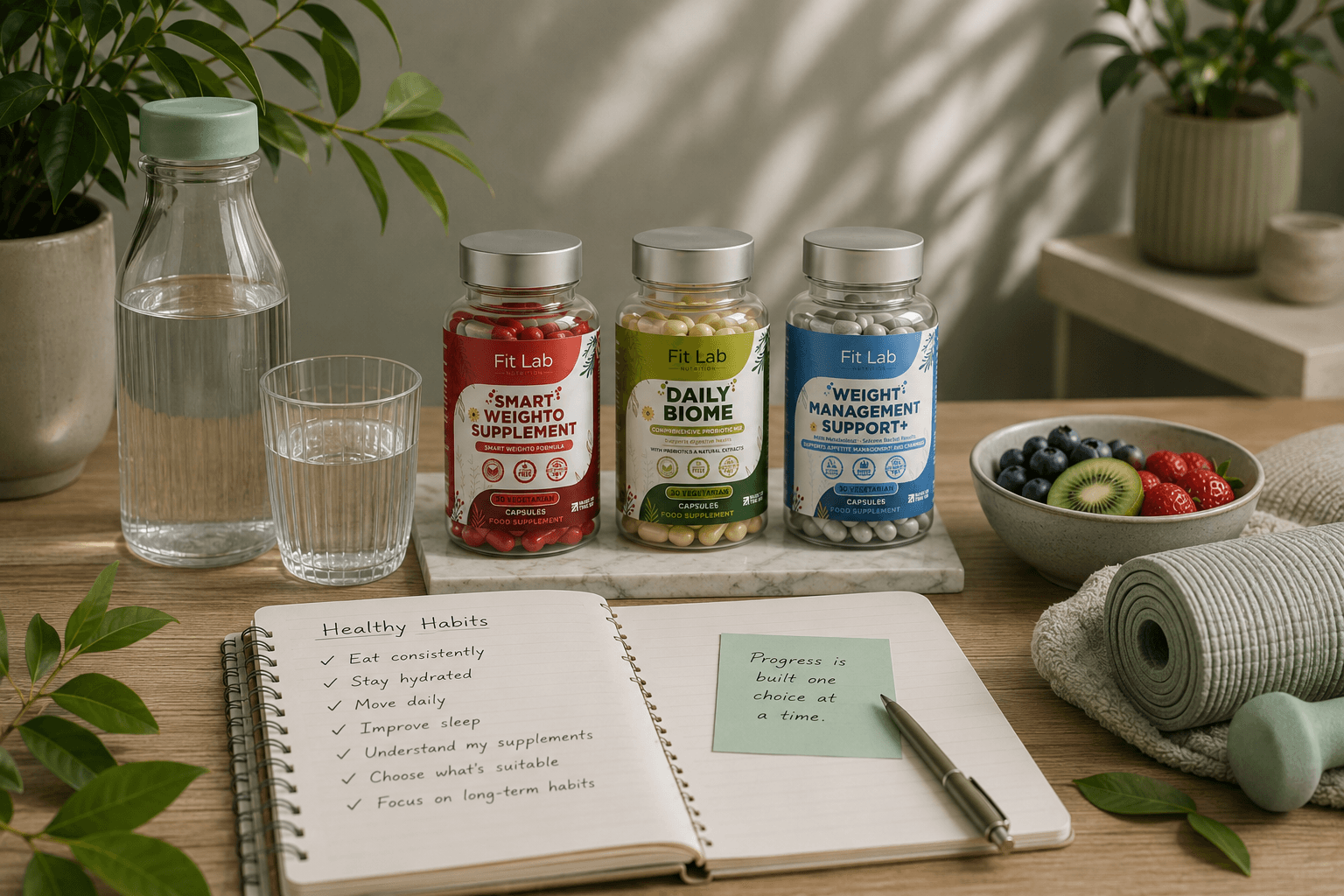
Useful questions may include:
Am I eating more consistently?
Am I drinking enough throughout the day?
Am I moving regularly?
Is my sleep routine improving?
Do I understand why I am using each supplement?
Have I checked whether the product is suitable for me?
Am I relying on a product instead of addressing a wider habit?
These questions can help people make more deliberate choices without creating unnecessary pressure.
Frequently Asked Questions
What is Fitlab Nutrition?
Fitlab Nutrition is focused on practical, responsible information about nutrition, supplements and everyday wellbeing. It encourages people to view supplements as one possible part of a balanced lifestyle rather than as shortcuts or replacements for healthy habits.
How do supplements fit into a balanced lifestyle?
Supplements may complement a routine that already includes a varied diet, movement, hydration, sleep and stress management. Their role should be specific and considered rather than automatic.
Can supplements replace a healthy diet?
No. Supplements should not be used as replacements for a varied and balanced diet. Whole foods provide a broad range of nutrients and dietary components that cannot always be reproduced in a single product.
How do I know whether a supplement is suitable for me?
Check the ingredient list, serving guidance, allergen information and suitability statements. Consider your diet, medication, health conditions and personal needs. Seek professional advice where there is uncertainty.
Can supplements be taken with medication?
Some supplements may interact with prescribed or non-prescribed medicines. Anyone taking medication should speak with a doctor, pharmacist or other appropriate healthcare professional before beginning a new supplement.
How long does it take to notice a difference?
There is no universal timeframe. Experiences vary depending on the product, the reason for use and the individual. Some people may not notice a clear difference, even when a supplement is used correctly.
Are supplements suitable for everyone?
No. Suitability may be affected by age, pregnancy, breastfeeding, allergies, medication and existing health conditions. Product information should always be reviewed carefully.
Why is ingredient transparency important?
Clear ingredient information helps people understand what they are taking and whether it aligns with their dietary preferences, health circumstances or allergy requirements.
What should I check before using a supplement?
Review the ingredients, serving directions, warnings, storage instructions and suitability information. Check for repeated ingredients if you already use other products.
Should I take more than the stated serving?
No. The stated serving should not be exceeded unless a qualified healthcare professional has provided specific guidance.
When should I speak to a healthcare professional?
Professional advice is particularly important if you are pregnant, breastfeeding, taking medication, managing a health condition or experiencing persistent or unexplained symptoms.
How should supplements be stored?
Follow the storage instructions shown on the product label. In general, supplements should be kept securely closed, protected from unsuitable heat or moisture and stored away from children.
A Calm and Practical Way Forward
Wellbeing does not need to be built around extremes.
For many people, the most meaningful improvements come from ordinary decisions made consistently: eating a more balanced meal, drinking enough water, taking a walk, preparing for sleep or pausing before adding another product to an already complicated routine.
Fitlab Nutrition supports this thoughtful approach.
Supplements may have a useful place when they meet a genuine need, are chosen carefully and are used alongside sound daily habits. They should never be presented as cures, guarantees or substitutes for medical care.
A balanced routine is personal. It should reflect the individual's lifestyle, needs and circumstances.
There may be times when progress feels slow or when healthy habits become difficult to maintain. This is normal. The aim is not to follow a flawless routine every day. It is to create a structure that can be returned to, adjusted and continued over time.
Clear information makes that process easier.
By understanding ingredients, reading labels carefully, respecting serving guidance and recognising when professional advice is needed, people can make more informed decisions about their nutritional support.
Fitlab Nutrition stands for moderation over extremes, clarity over hype and consistency over quick fixes.
Health and Supplement Disclaimer
The information provided by Fitlab Nutrition is intended for general educational purposes only. It does not constitute medical advice, diagnosis or treatment.
Food supplements should not be used as substitutes for a varied and balanced diet or a healthy lifestyle. Always read and follow the instructions provided on the product label, and do not exceed the stated serving.
Anyone who is pregnant, breastfeeding, taking medication, managing an existing health condition or considering supplements for a child should seek advice from an appropriate healthcare professional before use.
Stop using a product and seek professional advice if you experience an unexpected or concerning reaction.
Persistent, worsening or unexplained symptoms should be assessed by a qualified healthcare professional rather than managed only through supplements.
Keep all supplements out of the sight and reach of children.
Food supplements are not medicines and are not intended to diagnose, treat, cure or prevent disease.